
Artists’ Billboard: Angus Braithwaite
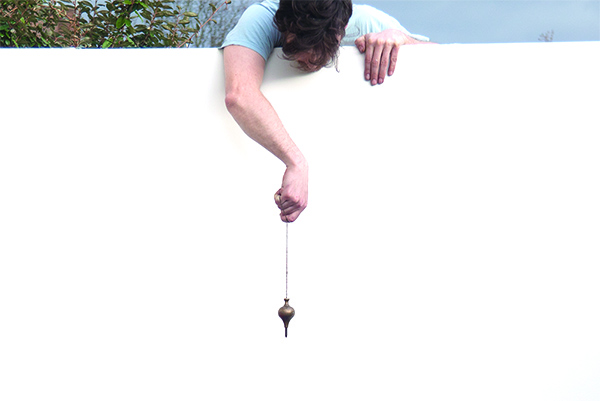
Artists’ Billboard Commission: Angus Braithwaite
Opens Saturday 2 April 2016, 6.30 – 8.30pm
Join us for the unveiling of Angus Braithwaites playful billboard piece and his ‘further investigations into dowsing’ performance at 7.30pm.
The *Twinkle* cocktail will be served.
Launch of Aesthetic Indifference by Lisa Penny / Saturday 5 March 2016, 6.30 – 8.30pm

Launch of Aesthetic Indifference by Lisa Penny
Saturday 5 March 2016, 6.30 – 8.30pm
Performance at 7.30pm
Lisa Penny’s book ‘Aesthetic Indifference’ has developed out of a performance she presented during a residency at Eastside International in LA in 2015. It will be launched alongside a performance of the text at X Marks the Bökship on Saturday 5 March 2016.
Penny worked through the novel ‘Less Than Zero’ by Bret Easton Ellis to explore though interpretive reading, the social symbolism and culture poetics of clothing.
The reduced text is published with visual references, from personal photographs and found material, playing with the idea of clothing as a form of communication.
The text will be read by Carl Taylor Lewis, an actor based in London.
The cocktail Tequila Sunrise will be served.
Aesthetic Indifference
By Lisa Penny
Self published with the support from The Arts Council of England
Published March 2016
Retail price £7
Special Launch Price £5
X Marks the Bökship
^ Matt’s Gallery
42 – 44 Copperfield Road
Mile End
London E3 4RR
Artist Billboard: Jim Woodall
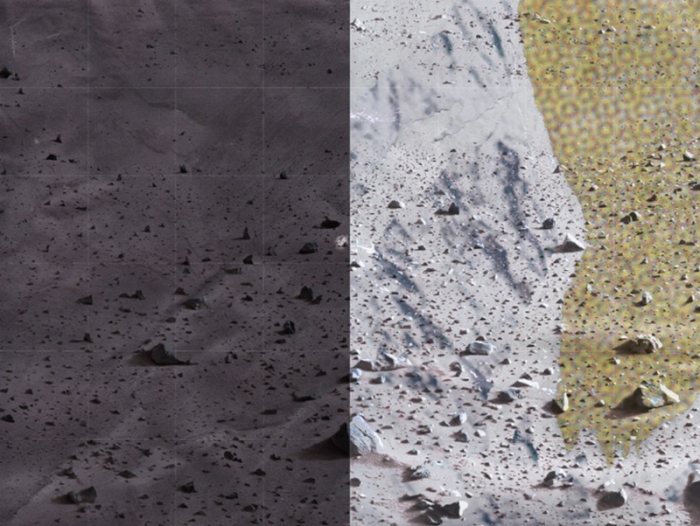
Artist Billboard: Jim Woodall
Wednesday 10 February 2016, 6 – 8.30pm
For the first billboard commission of 2016, Jim Woodall has cut up and reconstructed the layers of theprevious artists’ billboards to create a new collage work for the site.
Join us for the launch of the latest artist billboard, accompanied by a sound performance by Jon Lowe. Jim Woodall and Jon Lowe worked together as part of CutUp, from 2005-2009.
Working across diverse media, including sculpture, photography, video and installation, Woodall’s practice is rooted in intervention. He was a founding member of CutUp collective, an interventionist art group, from 2004-2009.
X Marks the Bökship
^ Matt’s Gallery
42 – 44 Copperfield Road
Mile End
London E3 4RR
Artists behind bars
Friday 29 January 2016, 8pm – late
Artists Behind Bars, at The Horse Hospital

Kitty Finer presents Artists Behind Bars; a group show, where for one night shift only – the bar is the work of art, the artist is the bartender and the spectator is the punter. X Marks the Bökship, Kitty Finer, Marcia Farquhar, Jane Howard and Tai Shani will be building, installing, hosting and running their own bars. The Horse Hospital will be home to this collection of one night only bars – creating a total installation within the space that is one of central London’s last bastions of independent, experimental and DIY culture
The Bökship cocktail bar ‘Push Bar to Open’ will be propping up the Horse Hospital tonight so come along and do some bar crawling. All money goes to hellraising for the HH.
‘Push Bar to Open’ is a pop-up poor mans champagne and cocktail bar, which started life as a hatch bar in a fire escape beneath the billboard at X Marks the Bökship at Matt’s Gallery. At book launches artists are asked to suggest a cocktail to tie in with their book that is served at the event. Head bar tenders are Eleanor Vonne Brown and Daniel James Wilkinson who have been mixing their drinks for years.

Billboard by Mark Pawson

Why don’t you….? Artists’ billboard by Mark Pawson. December 2015 – January 2016.
Friends with Books, Berlin
Friday 11– Sunday 13 December 2015
Friends with Books: Art Book Fair Berlin. Hamburger Bahnhof, Berlin
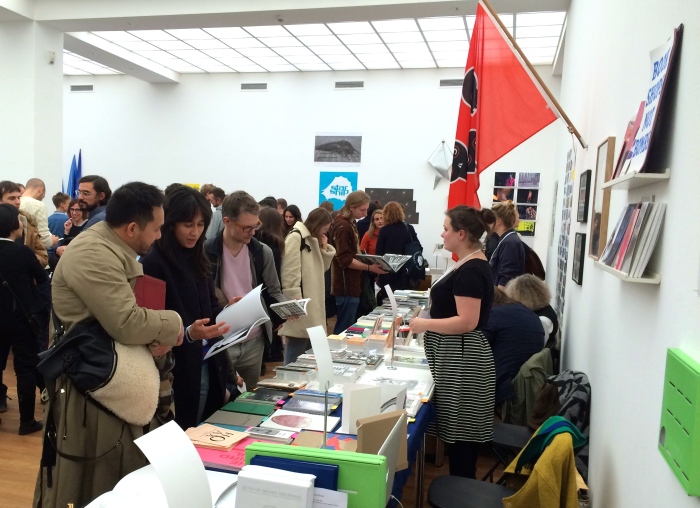
Launch of G.S.O.H./ Saturday 21 November, 4 – 7pm

Launch of G.S.O.H. The Rest is Dark, The Rest is Dark series by Book Works.
With Clunie Reid, Jennet Thomas, Maija Timonen, and Head Galley
Film, performance and readings by Jennet Thomas, Maija Timonen, and Head Gallery, and a new billboard work by Clunie Reid, for the Bökship’s artists’ billboard project kindly supported by The Elephant Trust.
PROGRAMME:
12 – 7pm
Screenings of The Unspeakable Freedom Device, Jennet Thomas (2015), 40 minutes. The film will be screened every 40 minutes until 7pm: 12.00, 12.40, 1.20, 2.00, 2.40 etc.
4pm
Book launch, drinks, BBQ and records played at intervals until 7pm.
5pm
Readings from Maija Timonen’s The Measure of Reality, by November Channels, a feminist script writing group formed in 2015.
6pm
A performance by Head Gallery, from Head, by Mo-Leeza Roberts.
The film, The Unspeakable Freedom Device by Jennet Thomas, was commissioned by Grundy Art Gallery, Blackpool. Book Works and Matt’s Gallery are supported by Arts Council England.
Billboard by Clunie Reid.

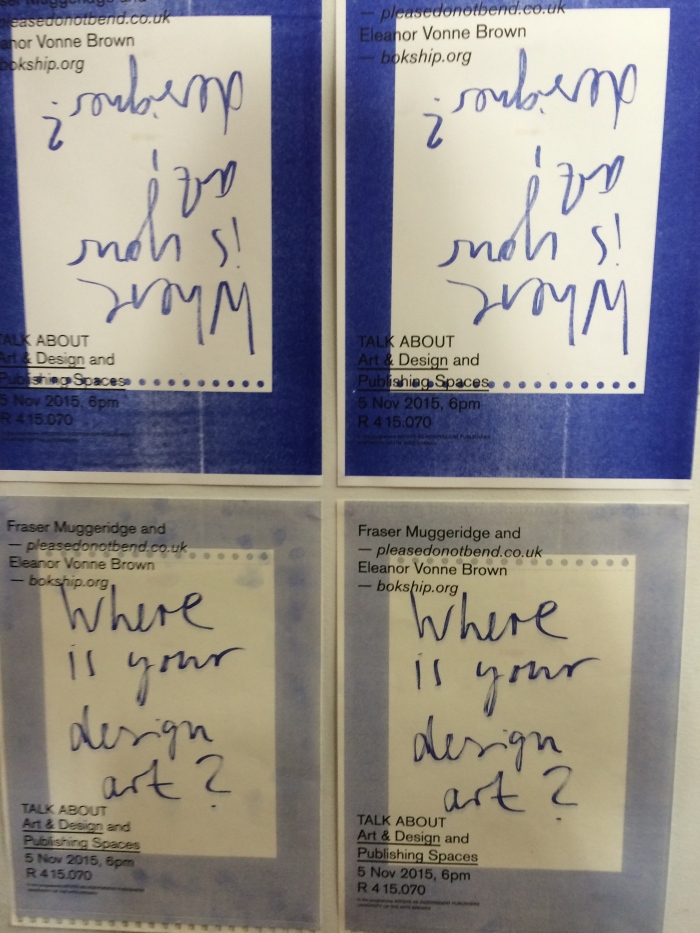
Workshop and XArchive in Bremen
Workshop with Prof. Andrea Rauschenbusch at Hochschule für Künste / University of the Arts Bremen, Germany
You will be introduced to the small photo-conceptual artist books, among them Twenty-six Gas Stations, Various Small Fires, Every Building on the Sunset Strip, Thirty four Parking Lots and asked to compile your own collection of images or texts and edit them to create an artist book with a typographic cover. The workshop covers concepts of artists’ books, collation, editing, design and typography and printing and production.
You are required to make a single copy of a book that follows on from the idea of a Ruscha
appropriation. Please choose a subject and work through how this can be expanded. Your book must have pages and be bound in some way with a typographical cover.

A Digital Suicide by Liam Scully / Friday 13 November 2015, 6.30 – 9pm

Artist Book Launch
A Digital Suicide by Liam Scully
Friday 13 November 2015, 6.30 – 9pm
‘A Digital Suicide’ is the term that refers to the elimination of one’s information online – namely social networking sites such as Facebook or Twitter.
The project undertaken over the past year and a half, has been the documentation of Liam Scully’s Facebook ‘Digital Suicide’. When you commit “digital suicide” on Facebook, they offer you the opportunity to download your data, just in case you wish to return as you once were. Every single interaction, like, poke, post and private conversation exists inside this data file, pouring over your data will cause both fascination and concern, ” but those conversations were deleted years ago?” so you thought, however it is all there; plain as data. As well as the data, there are photographs, hundreds, possibly thousands, every one you ever posted to facebook, including the ones you deleted.
Liam Scully has embarked on a project over the past year and a half, to reclaim that data, it was important for him to do this in a personal, tiresome, physical way. Every page of meta-data has been printed onto sheets of pink thermal electrocardiograph paper, every photograph ever posted has then been recorded through Liam Scully’s physical act of drawing, collage, mark, rubbing out, spillage and stain; thus rendering the digital analogue and permanent.
The culmination of this body of work, has always been to make a book. A massive book at that, one that is heavy and awkward to hold, but crafted and beautiful. A limited edition of just 3 was an important way of distilling that once vulnerable, personal data, and furnishing it into something of quality and value.
You are invited to the “WAKE” on Friday the 13th November, to celebrate Liam Scully’s life on facebook 2008 – 2013.
We will have the book on display for viewing as well as a limited edition book, “In Loving Memory”, an obituary by friend and art writer Elizabeth Homersham.
A Digital Suicide has been supported using public funding by the National Lottery through Arts Council England.
 Bokship's Blog